

Dr. Emmanuel De La Cruz Highlights the Growing Demand for Revision Liposuction Surgery

Double-Board Certified Plastic Surgeon Dr. Emmanuel De La Cruz
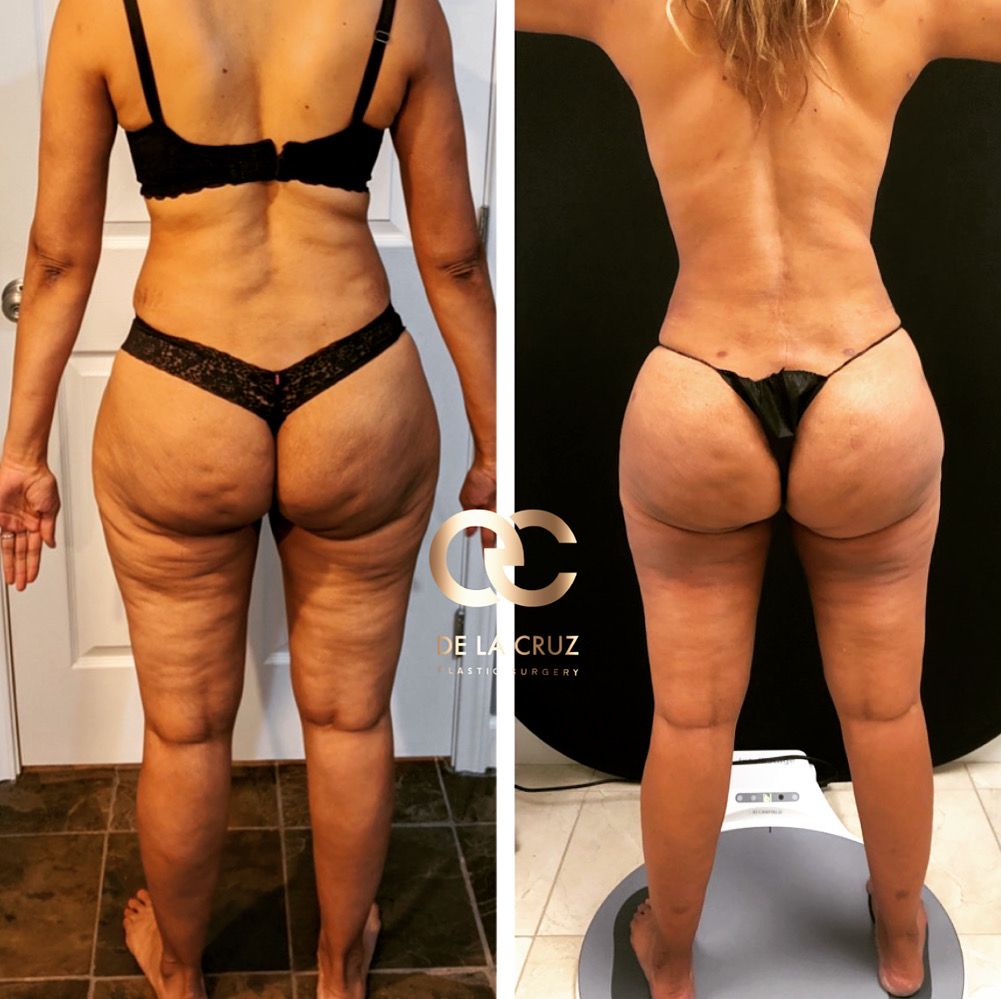
Revision Liposuction using VASER technology and Renuvion performed by Dr. Emmanuel De La Cruz.
Why Revision Liposuction Is Becoming One of the Most Demanding Procedures in Plastic Surgery
According to Houston plastic surgeon Dr. Emmanuel De La Cruz, revision liposuction in Houston has become one of the fastest-growing and most technically demanding areas in aesthetic surgery.
“Revision liposuction is often significantly more difficult than the original surgery itself,” says Dr. De La Cruz. “Once scar tissue, fibrosis, contour deformities, and altered anatomy are present, the procedure requires a completely different level of surgical planning, judgment, and tissue management.”
Dr. De La Cruz is a double board-certified plastic surgeon certified by both the American Board of Plastic Surgery and the American Board of Surgery. His practice at De La Cruz Plastic Surgery focuses extensively on high-definition liposuction, advanced body contouring, and revision surgery.
He notes that while liposuction remains one of the most commonly performed cosmetic procedures worldwide, the rapid expansion of body contouring techniques—combined with the growing popularity of social media-driven aesthetic trends—has also contributed to a rise in patients seeking corrective procedures.
“One of the most common misconceptions is that liposuction is simply fat removal,” Dr. De La Cruz explains. “In reality, advanced body contouring requires an understanding of anatomy, skin behavior, tissue support, contour transitions, and long-term durability. Overly aggressive fat removal or poor contour design can create deformities that are very difficult to correct.”
Common concerns seen in revision liposuction patients include:
contour irregularities
skin waviness
fibrosis and scar tissue
asymmetry
residual fullness
over-resection deformities
and skin laxity following prior procedures
According to Dr. De La Cruz, many revision cases also involve patients who underwent multiple procedures over time, creating increasingly complex tissue changes that require advanced reconstructive contouring strategies.
“Secondary and tertiary liposuction procedures often require a combination of scar release, structural fat grafting, skin contraction technologies, and careful contour redesign,” he says. “The goal is not simply to remove more fat. In many cases, the challenge is restoring balance, smoothness, and structural support.”
Dr. De La Cruz emphasizes that modern revision body contouring has evolved beyond traditional liposuction techniques. His approach centers on a systems-based philosophy known as the SEAL technique (Synchronous Energy-Assisted Liposuction), which integrates multiple technologies in a coordinated approach designed to improve contour refinement, tissue contraction, and long-term aesthetic durability.
The philosophy combines:
VASER ultrasound-assisted liposuction
power-assisted liposuction (PAL)
radiofrequency-assisted tissue contraction
and structural fat grafting
to address both volume reduction and soft tissue remodeling simultaneously.
“Today, body contouring is not only about fat reduction,” says Dr. De La Cruz. “Skin contraction, connective tissue remodeling, and structural balance play a major role in achieving natural and durable outcomes, particularly in revision surgery.”
He explains that revision surgery often requires a more conservative and strategic approach than primary liposuction. Excessive fat removal can compromise skin support and worsen contour deformities over time.
“One of the major shifts occurring in modern body contouring is the understanding that preserving structural support may be just as important as removing fat,” he explains. “Natural-looking results depend on maintaining harmony between the skin, connective tissue framework, and underlying anatomy.”
Dr. De La Cruz also notes that the recent rise of GLP-1 medications such as Ozempic®, Wegovy®, and Mounjaro® has created a new category of body contouring patients with unique tissue characteristics and skin laxity concerns.
“Patients experiencing rapid weight loss often present with different tissue quality challenges compared to traditional liposuction patients,” he says. “This requires a different level of planning and often a greater emphasis on skin contraction and contour durability.”
In addition to his clinical work, Dr. De La Cruz has published research involving lipoplasty, large-volume liposuction, and perioperative safety. His article “Lipoplasty in the Overweight Patient” was published in Clinics in Plastic Surgery (2024), and his work has focused extensively on patient safety and surgical optimization.
He has also lectured internationally on high-definition liposuction and body contouring techniques at meetings including:
AestheticStanbul
the Total Definer Symposium and TD ABS Meeting in Cartagena
and the American Society of Plastic Surgeons The Meeting
Dr. De La Cruz was also awarded the Grand Master Total Definer Award for Best High-Definition Liposuction Results by Alfredo Hoyos, one of the pioneers of modern high-definition liposuction. The recognition was awarded among six surgeons nominated worldwide.
Despite advances in technology, Dr. De La Cruz believes that surgical judgment remains the most important factor in achieving safe and natural outcomes.
“Technology can assist contour refinement and skin contraction, but it does not replace anatomical understanding or surgical experience,” he says. “Ultimately, the best outcomes come from combining technology with thoughtful surgical planning, restraint, and long-term perspective.”
As demand for revision body contouring continues to increase, Dr. De La Cruz believes patients should place greater emphasis on surgeon experience, artistic judgment, and long-term contour strategy rather than focusing solely on short-term trends or aggressive fat removal.
“Revision surgery teaches an important lesson,” he says. “In body contouring, durability and balance matter just as much as definition.”
For more information, visit https://www.delacruzplasticsurgery.com/
Media Contact:
De La Cruz Plastic Surgery
15016 FM 529 Rd
Houston, TX 77095
Phone: 832-776-1134
Email: help@delacruzplasticsurgery.com
Emmanuel De La Cruz
Cypress Surgicare of Texas
8327761134
email us here
Visit us on social media:
LinkedIn
Instagram
YouTube
Legal Disclaimer:
EIN Presswire provides this news content "as is" without warranty of any kind. We do not accept any responsibility or liability for the accuracy, content, images, videos, licenses, completeness, legality, or reliability of the information contained in this article. If you have any complaints or copyright issues related to this article, kindly contact the author above.
